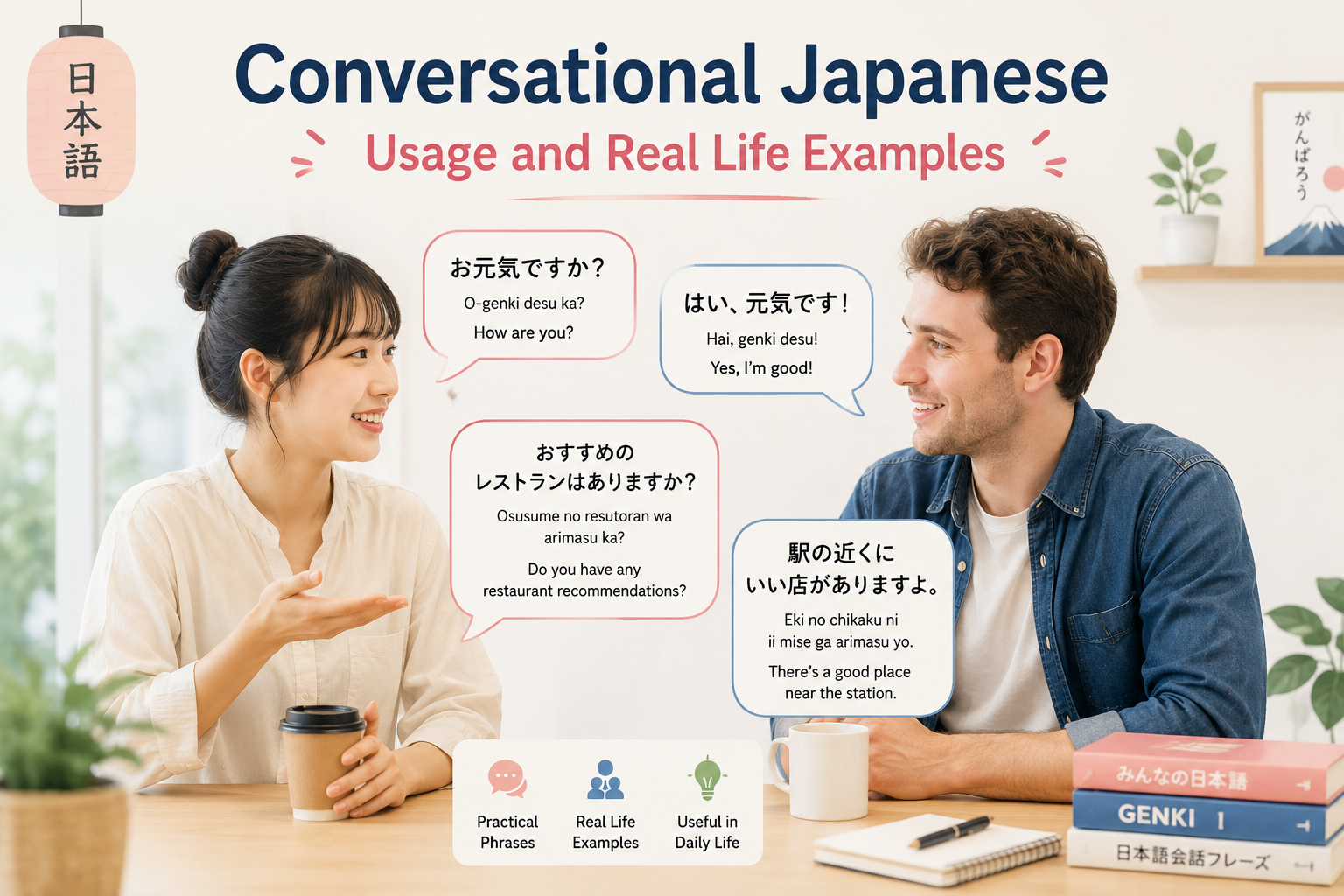
Are you tried speaking Japanese after studying textbooks, you may have felt something was missing means what I am doing wrong actually? You aren’t alone because transitioning from textbooks to the real world can feel like learning a whole new language from scratch. That’s where conversational Japanese comes in the frame and teaches you the soul of the culture like how people actually think, feel and connect in daily life.
Unlike guides, spoken Japanese changes depending on who you are talking to. Whether you are ordering ramen, chatting with coworker or texting a friends, the context dictates your words. Learning conversational Japanese helps you sound more natural, polite and confident in real life interactions. If you want to learn conversational Japanese online and want to fill the gap between knowing the language and speaking it then you can come at NihongoMax, we specialize in turning learners into confident speakers in very practical, approachable and fun way.
Conversational Japanese refers to everyday spoken language which is used by native speakers in real situation. It is not just vocabulary but also reading the air. In japan, communication is deeply rooted in social harmony which means that native speakers naturally adjust their tone, politeness levels and even sentence ending based on their relationship with the listener. For example, instead of saying “No” directly, Japanese speakers use more soft response to avoid sounding rude.
While a dictionary might give you one word for “I” which require watashi, boku or ore depending on the situation. If you want to understand the best way to learn conversational Japanese then you have mastering these cultural layers. When learners understand the balance between language and culture then conversations become smoother and more respectful. This skill is important whether you are traveling, studying for JLPT levels or working in Japan.
This is the language of friendship which is known as tameguchi. It is used with people of the same age, younger family members or close friends. It is relaxed, friendly and expressive.
In tameguchi, speakers often drop polite ending like desu and masu. Their sentences sound shorter and more natural.
For Example:
This is the “safe zone” for most learners which also known as teineigo. It is the most usedul form of conversational Japanese for beginners. It uses the standard like desu and masu endings. It is respectful enough for starngers and colleagues but friendly enough for daily interactions.
For Examples:
Keigo is the honorfic language which is used in professional environments or when speaking to someone of high status. It shows respect and acknowledges social hierarchy.
It can feel hard to use because it has special verb forms and expressions. However, you need to understand its purpose which is more important than mastering every rule immediately.
For Examples:
The way Japanese people speak in person is different from online. In texts, chats and social media, people use shoter sentences, net slang and very relaxed tones.
For Example:
When learners figuring out how to learn conversational Japanese then many students fall into same traps:
Japanese conversation values harmony. If there is silence, it is not awkward- it is respectful. Indirect expressions prevent conflict and humility gives strength in the relationship.
Let’s take an example:- There is a word ちょっと難しいです which means “that’s a bit difficult” but it is used as polite “No”. If you understand these cues then it can make conversations smoother and more natural.
Learning conversational Japanese without culture is incomplete. If you are cultural aware then it can turn correct sentences into meaningful communication.
If you are wondering how long to learn conversational Japanese and the answer depends on your method. While basic travel phrases take a few weeks and for comfortable flow will take consistent practice. The best app to learn conversational Japanese can help with vocab but nothing replaces human interaction. To learn effectively:
NihongoMax focus on conversation first learning. A language is a living thing. In NihongoMax, Lessons are designed around real situations, correct pronunciation and cultural understanding. We have flexible schedules and expert instructors which help student to learn Japanese in natural way, not robotically. Whether you are a beginner or early intermediate learner, NihongoMax will help you to gain real confidence.
If you want to learn conversational Japanese online with guidance that actually works then NihongoMax will provides you the structure and support which you need.
Mastering conversational can turn you from a tourist into a guest and from a student into a friend. The different levels of politeness and cultural cues can cause daunt at first but they are simple tools to help you to connect more deeply with people.
Consistency is the key because whether you are wondering how to learn conversational Japanese fast or just looking for a new hobby. You should Join NihongoMax today which help you to get fluency in true Japanese.
Yes, conversational Japanese and JLPT Japanese are different because conversational japanese focuses on everyday speaking and listening while JLPT Japanese is exam oriented.
Yes, beginners can absolutely start with conversational Japanese try to start with some basic conversations that help to build confidence that improve listening skills.
With consistent effort studying (30 – 60-minute daily) that you can handle greeting, simple question and daily conversation improve basic sentence patterns that most beginner lacks.
Just start speaking with some basic sentences and greeting then shadow native speaker means repeat line from short Japanese video or anime clips.
Yes, online learning effectively helps real Japanese conversations that includes active speaking practice and some listening exercise expose learners to natural expression and pronunciation.